Superstudio
Continuous Monument
1969
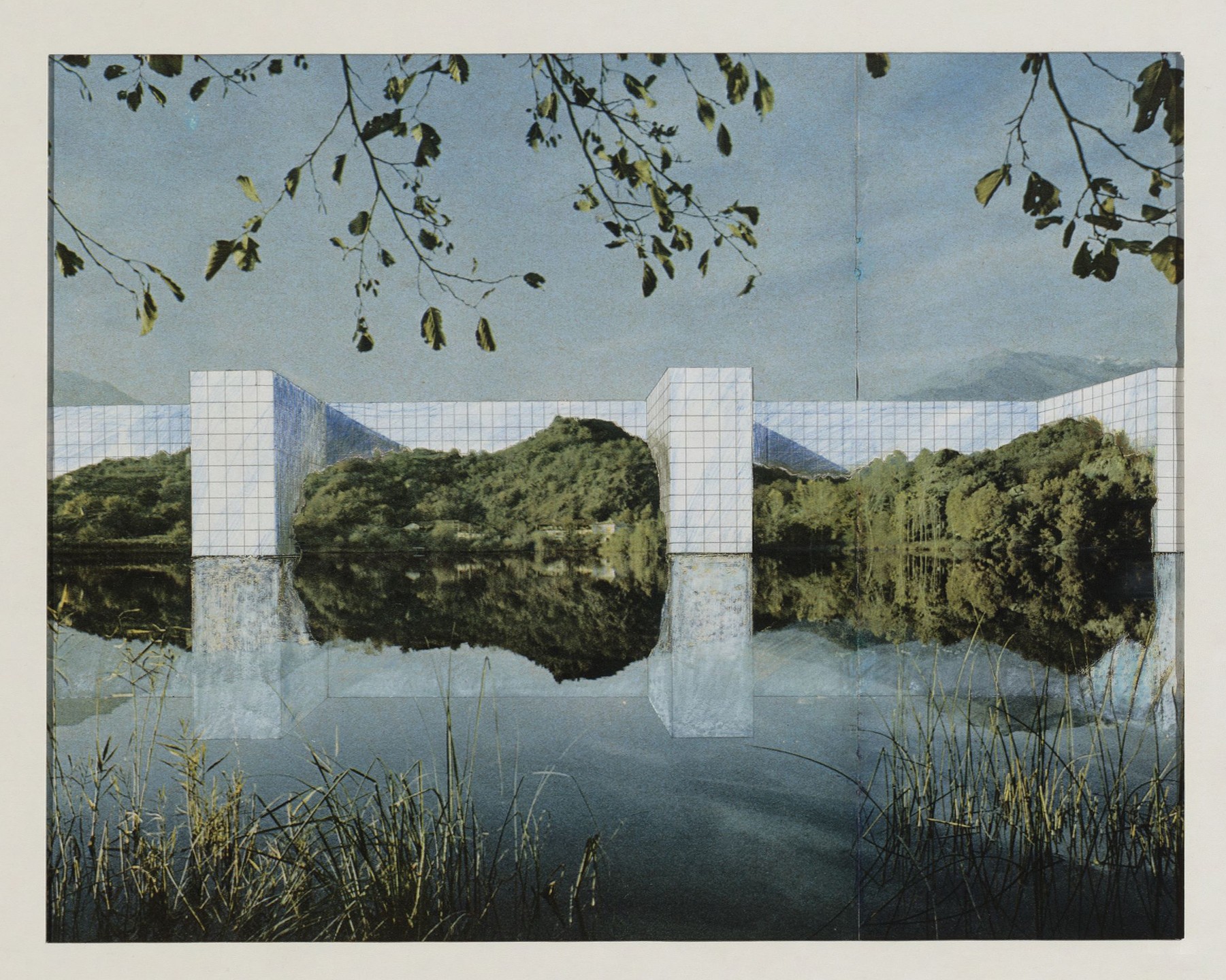
Superstudio’s Continuous Monument (1969) proposed a global megastructure: a perfectly gridded surface extending across cities, landscapes, and oceans. Rendered through collaged photomontages, the project imagined an endless piece of architecture wrapping the planet — at once terrifying, seductive, and absurd.
Scale was pushed to its extreme. Architecture no longer framed a building or city, but the entire Earth. This inversion destabilized any fixed sense of proportion: the monument was at once detail and infinity, object and environment.
Representation was the medium. The Continuous Monument was never built; it existed only in drawings, collages, and images. These images were not proposals in the traditional sense but critiques of modernist faith in technology and planning. Architecture became a language of critique rather than construction.
Materiality was abstracted into pure surface: the grid. This simple module embodied both promise (universal order, connectivity) and threat (sameness, erasure of difference). Ambiguity was deliberate — utopia and dystopia contained in the same form.
The power of the Continuous Monument lies in its totality. By extending endlessly, it suggested that architecture could no longer be considered in fragments — that it was a cultural system shaping the whole of human experience.
For your Archive, it stands as a radical precedent of Gesamtkunstwerk thinking: not a single object or building, but a climate of representation where design operates as image, critique, and worldview.
Architecture, Image, Representation, Critique, Utopia, Scale